How to Become a Clinical Research Coordinator in the US: Complete 2025 Playbook
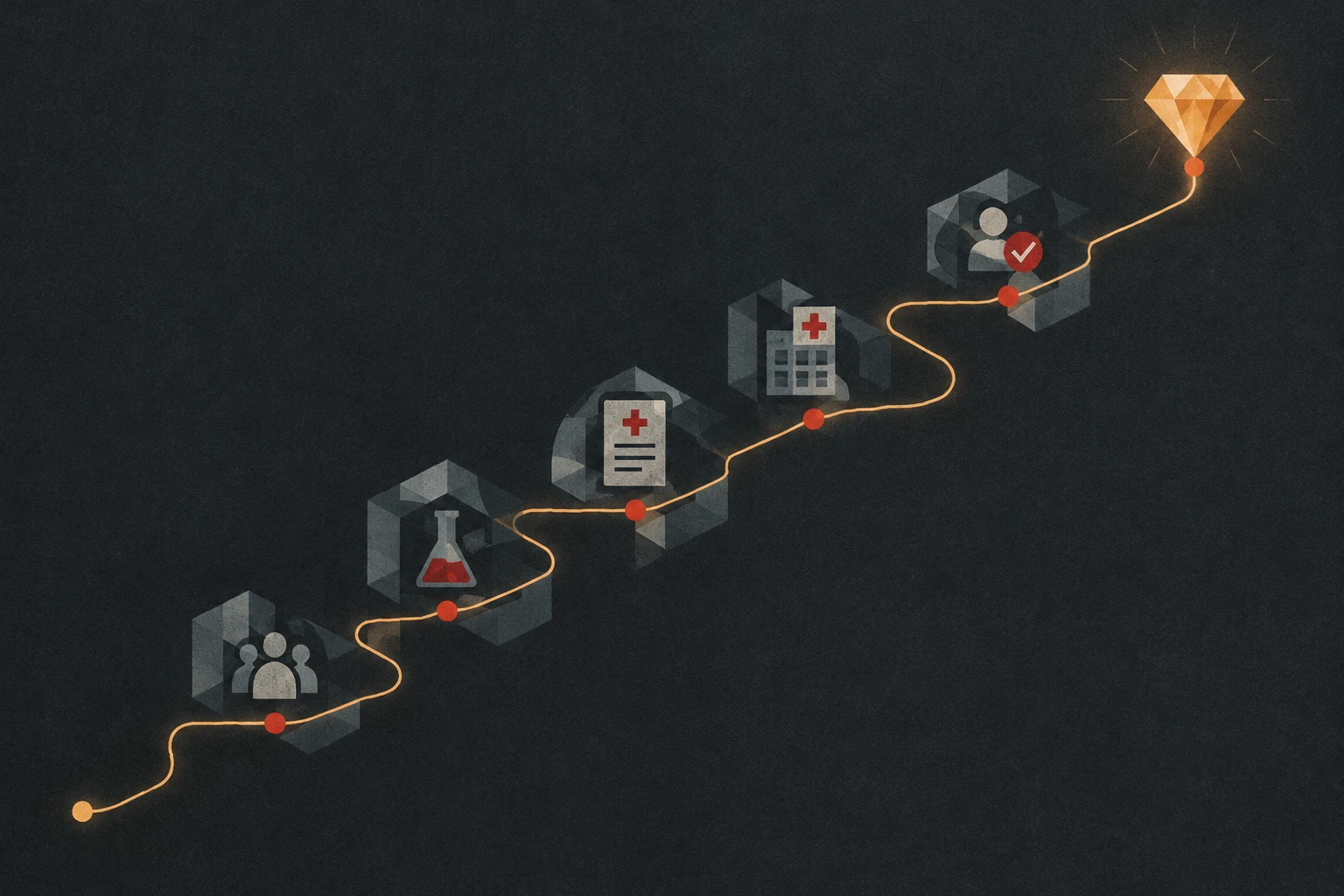
Clinical Research Coordinator (CRC) To learn how to become a clinical research coordinator in the US, you need a health/science degree, ICH-GCP certification, hands-on EDC and eTMF training, and site-based experience. Most entry-level CRCs build a portfolio, apply to hospital or CRO sites, and earn $55,000–$75,000 in year one.
If you are an Academic Lab Technician or Bench Scientist trapped in a low-ceiling lab role, or a Foreign Medical Graduate looking for US clinical research entry without residency, the path to how to become a clinical research coordinator can feel like a maze. Degrees alone are not enough anymore. US sites want proof you can run a trial, not just talk about science. The relief? There is a structured way out.
Global clinical trials are increasing, and US hospital sites are desperate for coordinators who understand FDA audits, ICH-GCP, and real-world EDC systems. You do not need a US medical license to start. You need a targeted skill set and a portfolio that screams 'audit-ready'.
Build These Skills Now
Programs from ZANE ProEd Academy that directly address the skill gaps discussed above.

This playbook reverse-engineers the exact steps successful CRCs take. Whether you are transitioning from a bench or from bedside nursing, you can land your first CRC role in 3-6 months if you follow the system.
How to become a clinical research coordinator in the US?
Becoming a CRC in the US is a skill-based hiring process. Employers care about your ability to screen patients, manage regulatory binders, and survive an FDA inspection. You build that through certification and simulation, not just another degree.
What are the daily duties of a Clinical Research Coordinator?
The clinical research coordinator job description is wide. A CRC is the operational backbone of a clinical trial site. You are the bridge between the principal investigator, the sponsor, and the patient. Your day is a mix of clinical, regulatory, and data tasks.
- Patient screening and consenting: Reviewing medical records, explaining protocols, and obtaining informed consent.
- Study visits: Conducting vitals, ECGs, blood draws, and ensuring protocol compliance.
- Data entry: Entering data into Medidata Rave EDC, resolving queries, and maintaining source documents.
- Regulatory management: Maintaining the eTMF (electronic Trial Master File), IRB submissions, and essential documents.
- Site coordinator duties FDA audits: Preparing for and supporting sponsor monitoring visits and FDA inspections. You must know ICH-GCP inside out.
- Adverse event reporting: Identifying and reporting AEs and SAEs within timelines.
If you hate repetitive bench work but love organized chaos, this role fits. You will use ClinicalTrials.gov to track protocols and ClinicalTrials.gov is your public registry reference.
What is the average salary of a CRC at US hospital sites?
The CRC salary United States varies by region, experience, and site type. Entry-level CRCs at academic hospitals start around $55,000 - $70,000. With 2-4 years of experience, you can earn $70,000 - $95,000. Senior CRCs or lead coordinators at top biopharma hubs make $95,000 - $115,000+.
Location matters. Boston, Research Triangle Park (RTP), San Diego, and San Francisco pay the highest, but cost of living is higher. Remote CRC roles for CROs or sponsors can pay $65,000 - $90,000.
Certification matters. The CRC certification requirements for higher pay often include ACRP or SOCRA credentials. But you need experience first. That is the catch-22 we solve below.
Can you become a CRC without clinical trial experience?
Yes. Thousands of lab technicians, foreign medical graduates, and nurses do it every year. US sites are willing to train the right candidate if you show you already understand the workflow. The key is to replace 'experience' with 'verifiable simulation' and 'certification'.
- Get ICH-GCP certified: This is non-negotiable. It proves you know the regulations.
- Learn the systems: Get hands-on with Medidata Rave EDC, Veeva Vault eTMF, and Argus Safety. You can learn these through structured simulation toolkits.
- Build an audit-ready portfolio: Create sample regulatory binders, informed consent documents, and query resolution logs. Show, don't just tell.
- Target entry-level roles: Apply for Clinical Research Assistant, Regulatory Coordinator, or Data Coordinator roles first. These are the on-ramps.
- Network with sites: Attend ACRP chapter meetings and connect with CRCs on LinkedIn.
How do RNs transition into Clinical Research Coordinator roles?
The nurse to clinical research coordinator transition is one of the most natural career moves in US healthcare. Bedside RNs already have patient care skills, phlebotomy experience, and knowledge of hospital workflows. What they lack is regulatory and data management expertise.
Here is the bridge:
- Leverage your clinical skills: Your ability to assess patients and manage emergencies is gold. CRCs with nursing backgrounds are highly valued for oncology and cardiology trials.
- Learn the regulatory side: Take a dedicated ICH-GCP certificate course. Understand 21 CFR Part 11 and FDA audit expectations.
- Get EDC and eTMF training: Nurses often struggle with data entry. Master Medidata Rave and Veeva Vault to stand out.
- Apply internally: Many hospitals promote RNs from bedside to research. Talk to your research department. Shadow a CRC for a week.
- Consider CCRC certification: After 2 years of CRC experience, sit for the ACRP-CCRC exam.
RNs who make this switch often see better work-life balance and higher pay. The CRC salary United States for nurses can jump to $85,000 - $110,000 in biopharma hubs.
What is the difference between a CRC and a CRA in the US?
Many confuse these roles. The CRC works at the site (hospital/clinic) and manages patients and data. The CRA (Clinical Research Associate) works for the sponsor or CRO and monitors the site. The CRA travels to sites, verifies data against source documents, and ensures compliance.
- CRC: Site-based, patient-facing, data entry, regulatory binders. Salary: $55k-$115k.
- CRA: Sponsor/CRO-based, travel-heavy, monitoring, site oversight. Salary: $80k-$140k+.
Many professionals start as CRCs to gain site experience, then transition to CRA roles. For a deeper dive, read our guide on how to become a Clinical Research Associate in the US.
What skill gaps keep lab technicians and bench scientists out of clinical research?
Academic lab technicians and bench scientists are brilliant at pipetting, assays, and Western blots. But pharma sites do not hire based on lab technique. They hire based on regulatory compliance, data integrity, and patient safety.
What conventional education teaches: Scientific method, biochemistry, molecular biology, and maybe a little statistics.
What modern employers actually expect:
- Ability to navigate ICH-GCP and 21 CFR Part 11.
- Hands-on experience with EDC systems like Medidata Rave.
- Understanding of eTMF structure and essential documents.
- Experience with adverse event reporting and safety databases (Argus).
- Knowledge of FDA audit preparation and site coordinator duties.
If your resume only lists lab skills, you will be screened out. You need to translate your bench experience into clinical operations language. For example, 'maintained cell cultures' becomes 'maintained source documentation and followed strict protocol timelines'.
What is the step-by-step pathway to become a CRC in the US?
Here is the exact roadmap to get hired in 3-6 months:
- Month 1: Get certified. Complete an ICH-GCP certificate program. This is your baseline.
- Month 2: Master the tools. Practice with Medidata Rave EDC, Veeva Vault eTMF, and Argus Safety through simulation toolkits. Build a sample regulatory binder.
- Month 3: Build your portfolio. Create a PDF portfolio with a mock informed consent form, a query resolution log, and a monitoring visit follow-up letter. This proves you can do the job.
- Month 4: Apply strategically. Target Clinical Research Assistant, Regulatory Coordinator, and Data Coordinator roles at academic hospitals and CROs. Use LinkedIn and ACRP job board.
- Month 5: Interview with confidence. Use your portfolio to answer behavioral questions. Show you understand site coordinator duties FDA audits.
- Month 6: Negotiate and start. Expect offers between $55,000 and $75,000 for entry-level. Ask about certification reimbursement.
For a recruiter's perspective on this process, read How to Become a Clinical Research Coordinator: US Recruiter POV.
How can simulation-based learning and a verifiable portfolio get you hired faster?
Reading about clinical research is not enough. You need to do the work in a safe, simulated environment. That is where ZANE ProEd Academy comes in. We provide industry-grade simulation toolkits that mirror real pharma systems.
With our end-to-end-clinical-research-certification, you will process mock Argus Safety ICSR cases, enter data into Medidata Rave EDC, manage documents in Veeva Vault eTMF, and prepare FDA 21 CFR submissions. You graduate with a verifiable portfolio that proves to hiring managers you are audit-ready.
This is not theory. This is reverse-engineered from what US sites actually require. When you walk into an interview with a portfolio of simulated trial documents, you leapfrog candidates who only have a degree.
Build These Skills Now
Programs from ZANE ProEd Academy that directly address the skill gaps discussed above.
Which professional certifications close the CRC qualification gap?
ZANE ProEd Academy offers two core programs for aspiring CRCs. The end-to-end-clinical-research-certification is a comprehensive career accelerator. It covers clinical operations, regulatory affairs, data management, and safety reporting. You learn the full trial lifecycle.
The ich-gcp-certificate is your foundational credential. It proves you understand the international ethical and scientific quality standard for trials. But we go beyond a basic certificate. Our program integrates real-world scenarios, audit simulations, and documentation practice.
These are professional certification programs designed for serious career transition. They are not free courses. They are investments in your future. The ROI is clear: a $2,000 certification can unlock a $70,000 salary. That is a 3,400% return in year one.
Our simulation toolkits include Argus Safety ICSR case processing, Medidata Rave EDC, Veeva Vault eTMF, and FDA 21 CFR submissions. You build an audit-ready portfolio that hiring managers can verify. This closes the qualification gap that keeps lab technicians and foreign graduates out of clinical research.
To learn more about our approach, visit About ZANE ProEd.
Ready to audit your clinical research readiness?
Do not wait for the perfect moment. Global trials are expanding, and US sites are hiring now. The structured way out of the lab or bedside is through targeted certification and simulation.
Explore our Professional Certification Blueprints to see the exact curriculum. Audit your industry readiness by comparing your current skills to the CRC job description. Review the simulation curriculum and decide if you are ready to invest in your career.
Your first CRC job is 3-6 months away if you start today.
Build These Skills Now
Programs from ZANE ProEd Academy that directly address the skill gaps discussed above.
Follow Zane ProEd on Google
Preferred SourceAdd our publication as a preferred source to get the latest clinical research guides, industry updates, and career intel directly in your Google Top Stories & AI Overviews.